
-
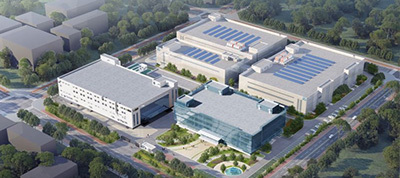 About UsBeijing Northland Biotechnology Co., Ltd. is an innovative biopharmaceutical company specializing in the research, development, production, and sales of gene therapy drugs, recombinant protein drugs, and ophthalmic drugs.
 -
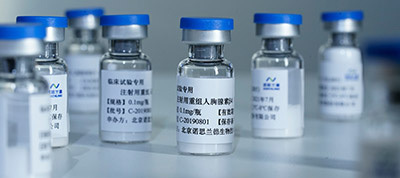 R&D and ProductsPrimarily dedicated to the research, development, and industrialization of novel bioengineered drugs in areas such as cardiovascular diseases, metabolic disorders, rare diseases, and ophthalmic diseases.
 -
 Investor RelationsGuided by the principle of “Creating Value, Serving Health,” the company is committed to becoming an innovative biopharmaceutical enterprise, contributing to the advancement of China’s pharmaceutical industry and the well-being of humanity.



NORTHLAND: Pharmaceutical revenue is promising, R&D investment remains steady, and its science and technology innovation attributes continue to improve.
Beijing Northland De Bio-Technology Co., Ltd. (stock abbreviation: Northland De, with stock code 430047, recently released its 2020 annual report. The data shows that during the reporting period, the company achieved operating revenue of 41.43286 million yuan, a year-on-year surge of 471.44%. Its subsidiary, Huonland, turned profitable during the reporting period, recording annual operating revenue of 40.3177 million yuan and a net profit of 9.7781 million yuan for the full year.
As a bio-innovative pharmaceutical company that has advanced to the Select Tier under the fourth set of criteria—“market capitalization plus R&D investment”— Northland De has not yet achieved commercialization of its major R&D efforts for new drugs, and its operating performance remains in the red. According to the annual report data, its net profit attributable to shareholders of the listed company in 2020 was -25.351 million yuan, representing a year-on-year reduction in losses of 31%. As a company listed on the Select Tier of the New Third Board that has been continuously reporting losses, such a significant improvement in performance—especially given the impact of the COVID-19 pandemic in 2020—can truly be described as “remarkable.”
Continuously increasing R&D investment; new drug development is progressing smoothly.
Northland De is an innovative biopharmaceutical company specializing in the research, development, production, and sales of gene therapy drugs, recombinant protein drugs, and ophthalmic medications. The company is a leading example of high-tech, innovation-driven enterprises listed on the Select Tier of the New Third Board. Currently, it is developing nine projects covering 11 indications, three of which have entered clinical trials. The company remains in the R&D stage.
The annual report shows that in 2020, the company’s R&D expenditure totaled 24.1444 million yuan, accounting for 58.27% of its operating revenue. Although there was a certain degree of decline compared to the R&D investment in 2019, the company’s R&D spending remained at a high level. Particularly in 2020, amid the severe impact of the COVID-19 pandemic, the company actively implemented countermeasures and accelerated clinical trial research, achieving remarkable results in new drug development.
Among these, the pivotal research project NL003 has completed ethical reviews and obtained ethical approvals from a total of 17 clinical centers for its Phase III clinical trial; 16 of these centers have now been activated. The preparation of Phase III clinical trial samples has been successfully completed, and the testing of each batch of raw materials, semi-finished products, and finished products has fully met quality standards. Furthermore, the production process has been further optimized to ensure the supply of drugs for the clinical trials.
The NL005 project has completed the Phase I trial summary report and achieved its intended research objectives. The Phase IIa clinical study, involving five participating centers, has fully commenced patient enrollment, with Fuwai Hospital serving as the leading coordinating center.
The NL002 project has completed the Phase IIIa clinical study summary report, identified the optimal dosing regimen, and initiated the design of the Phase IIIb clinical trial protocol as well as organized expert reviews.
In addition, the company has fully leveraged the advantages of its core technology platform and its Naked Plasmid Engineering Technology Center, focusing on the development direction of leading companies in genetic engineering drugs. It has initiated research on a total of five naked plasmid projects—Y001 through Y005—to further expand its portfolio of gene therapy products and broaden its pipeline for the development of novel bioengineered drugs.
In the field of ophthalmic generic drugs, the subsidiary Beijing Huonland Pharmaceutical Co., Ltd. has successfully passed the GMP inspection for its eye drops (single-dose 02 line) and now possesses the qualifications to manufacture both single-dose and multi-dose eye drops. During the reporting period, “Olopatadine Hydrochloride Eye Drops” received the “Drug Registration Certificate” approved and issued by the National Medical Products Administration; a registration application for the generic version of “Moxifloxacin Hydrochloride Eye Drops” was submitted and has been accepted for review. The subsidiary now has three ophthalmic products on the market, fully opening up its pharmaceutical business prospects. Through operations including technology transfer of eye drop formulations, commercial sales, and contract manufacturing, the subsidiary achieved total sales revenue of 35.5481 million yuan for the year, turning a profit from losses incurred in the previous year.
As shown above, Northland The company’s pharmaceutical R&D is steadily advancing, and its continuously expanding product pipeline will further enhance the company’s core competitiveness and is expected to bring substantial economic benefits.
The bioengineering project industrial base is steadily advancing.
Northland As early as 2012, De already acquired nearly 70 mu of industrial land in the Tongzhou Economic-Technological Development Zone to establish an industrialization base and prepare for the commercial production of its self-developed bioengineering drugs. The first-phase project—the ophthalmic pharmaceutical production base—has now entered a healthy operational track, and preparatory work for the second-phase bioengineering industrialization base is fully underway.
During the reporting period, the design work was largely completed. The conceptual design was undertaken by Korea’s Green Cross Engineering Maintenance Corp., Ltd., while the project’s basic and detailed designs were carried out by Sinopharm Group United Engineering Co., Ltd. The joint participation of both domestic and international leading companies in the design process provides strong support for the company’s construction of a biopharmaceutical production base that is advanced, continuous, intelligent, and information-based on an international level.
According to the annual report, the bioengineering base project has completed its environmental impact assessment report and geological survey, and all administrative approval procedures required for commencement are steadily progressing. Based on previously disclosed information, the project will include a formulation workshop, an R&D center, a quality control center, office buildings, and supporting facilities. The project is scheduled to break ground in 2021 and be completed in 2023. The base will primarily be used for the production of self-developed biopharmaceuticals as well as for providing CMO/CDMO services to external clients. At that time, the company will achieve fully integrated operations spanning the research and development, manufacturing, and sales of bioengineered pharmaceuticals.
High scientific and technological innovation attributes; optimistic outlook for a transfer listing.
Northland As an innovative biopharmaceutical company, De rose to two higher tiers on the New Third Board in 2020: first, it successfully advanced to the Innovation Layer on May 25, and then, on November 24, it further ascended to the Select Tier. The company is one of the few enterprises that have been promoted based on the “R&D + market capitalization” criteria, which clearly demonstrates that its innovative capabilities have received high recognition from regulators. Meanwhile, judging from the results of its public offering and fundraising in the Select Tier, investors in the capital market have also shown tremendous interest in the company. As the policy for transferring to the main board becomes increasingly clear, De’s highly innovative and science-and-tech-driven characteristics are once again becoming a focal point of attention in the capital market.
On March 20, 2020, the China Securities Regulatory Commission (CSRC) issued the “Guidelines for Evaluating Sci-Tech Innovation Attributes (Trial),” which proposed a specific system of evaluation indicators for sci-tech innovation attributes and clarified the standards for such attributes. At a CSRC press conference on April 16, 2021, Li Weiyou, Deputy Director of the Issuance Department of the CSRC, stated that the CSRC would revise the “Guidelines for Evaluating Sci-Tech Innovation Attributes (Trial)” to further refine the evaluation indicator system for sci-tech innovation attributes. Following this revision, the number of evaluation indicators for sci-tech innovation attributes will be expanded from the original “3+5” to “4+5,” with a new regular indicator added: the proportion of R&D personnel exceeding 10%.
According to Northland According to the company’s annual report, it is currently developing nine bioengineered drugs targeting 11 different indications, three of which have already entered the clinical research stage. As of now, the company holds 19 patents, including 14 authorized patents in China and 5 authorized patents abroad; an additional 9 patent applications are currently under review. The company has successively undertaken 8 national key projects for the development of new drugs, 1 key intergovernmental international science and technology innovation cooperation project, as well as numerous provincial- and district-level special projects. The company’s R&D team comprises 41 members, accounting for 39.8% of the total workforce.
Whether it was the previous “3+5” or the revised “4+5,” Northland Three clinical-stage projects and eight major national new-drug development initiatives—along with a research and development workforce accounting for nearly 40%—all clearly meet the STAR Market’s stringent criteria for high-tech innovation and genuinely embody “hard tech.”
Looking back at its development journey, since its establishment in 2004, the company has always taken a long-term perspective and remained committed to new drug R&D, accumulating substantial technological expertise and research achievements. Biotechnology companies listed on the STAR Market that have adopted the fifth set of standards—“listing without profitability”—include Zhejiang Jing Pharmaceutical (688266) and Sinovac Cell (688520). Junshi Biosciences (688180) Three companies whose market capitalizations at the time of issuance were approximately RMB 8 billion, RMB 11 billion, and RMB 48.3 billion, respectively. In comparison with the STAR Market companies mentioned above, Northland Its R&D pipeline and clinical progress are comparable to those of the other company.
Based on the generally positive information disclosed in its 2020 annual report, we believe that as the company steadily advances its growth strategy and the macroeconomic environment improves in the post-pandemic era, its technological achievements will become even more abundant, and its financial performance will gradually materialize. Consequently, expectations for a potential transfer to a higher-tier stock exchange should gradually become clearer.
This article is reprinted from Wabei.com. Original link: http://www.wabei.cn/Home/News/164800
Share to:


Friendly Links: Baidu | NORTHLAND
Contact Information
Address: Room A406, Zhongguancun Biomedical Park, No. 5 Kaituo Road, Shangdi, Haidian District, Beijing
Follow Us
Northland is an innovative biopharmaceutical company specializing in the R&D, manufacturing and sales of gene therapy drugs, recombinant protein drugs and ophthalmic medications.

Web site

NL-BIO

NL003
NL005