
-
 About UsBeijing Northland Biotechnology Co., Ltd. is an innovative biopharmaceutical company specializing in the research, development, production, and sales of gene therapy drugs, recombinant protein drugs, and ophthalmic drugs.
 -
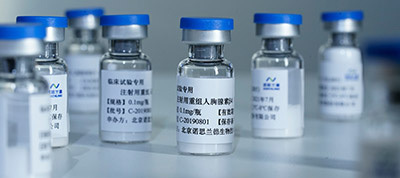 R&D and ProductsPrimarily dedicated to the research, development, and industrialization of novel bioengineered drugs in areas such as cardiovascular diseases, metabolic disorders, rare diseases, and ophthalmic diseases.
 -
 Investor RelationsGuided by the principle of “Creating Value, Serving Health,” the company is committed to becoming an innovative biopharmaceutical enterprise, contributing to the advancement of China’s pharmaceutical industry and the well-being of humanity.



The clinical research findings on the treatment of Rutherford Class 5 severe lower-limb ischemia with Donaperminogene Seltoplasmid Ingection Phase III have been publicly published in Molecular Therapy.
Recently, the “Clinical Trial of Sedomin Gene Injection for the Treatment of Rutherford Grade 5 Severe Lower Limb Ischemia—Phase III (HOPE CLTI-2),” led by Professor Changwei Liu from the Department of Vascular Surgery at Peking Union Medical College Hospital and involving 23 research centers nationwide, was published in Molecular Therapy—the leading international journal in the field of gene therapy (Molecular Therapy, IF: 12.4). The study results indicate that the gene therapy drug Sedomin gene injection (Donaperminogene Seltoplasmid, recombinant human hepatocyte growth factor naked plasmid injection) can significantly improve ulcer healing rates and demonstrates good safety when used to treat patients with Rutherford Grade 5 chronic severe lower limb ischemia.

Research Background
Severe lower limb ischemia represents the end stage of peripheral arterial disease. Currently, China has over 4.5 million cases of severe lower limb ischemia. Current guidelines recommend revascularization surgery as the treatment of first choice; however, some patients do not respond well to surgery or are unable or unwilling to undergo surgery due to reasons such as distal arterial occlusion, poor general health status, or advanced age. For this group of patients, there are currently no effective treatment options available, and they typically face the risk of amputation or death. Donaperminogene Seltoplasmid Injection is a naked plasmid gene therapy drug independently developed by Beijing Northland Biotechnology Co., Ltd. This product consists of a pCK vector that efficiently expresses the target gene, combined with a hybrid gene encoding hepatocyte growth factor (HGF-X7). After intramuscular injection, this product can transfect striated muscle cells, enabling them to express and secrete two HGF isoforms—HGF723 and HGF728. The HGF proteins bind specifically to the transmembrane tyrosine kinase receptor c-Met on the surface of vascular endothelial cells, stimulating endothelial cell proliferation and simultaneously promoting the migration of both endothelial and smooth muscle cells. As a result, this facilitates angiogenesis and the establishment of collateral circulation at the injection site, thereby improving blood perfusion in the lower limbs.
Experimental Design
This study is a multicenter, randomized, double-blind, placebo-controlled trial (NCT04274049) designed to evaluate the safety and efficacy of Cedomin-based injection administered via local intramuscular injection in subjects with severe lower-limb ischemic disease (Rutherford Class 5). The primary endpoint is the rate of complete ulcer healing at Day 180. Secondary endpoints include the percentage of subjects whose ulcer area decreased by ≥50% from baseline at the last visit, the time from first administration of the study drug to complete ulcer healing, the rate of complete pain relief at Day 180, the change in Rutherford classification from baseline, the percentage of subjects undergoing vascular reconstruction (either open surgery or interventional therapy) by Day 180, the rate of major amputations, the mortality rate, and safety outcomes.
Research findings
Demographics and Baseline Characteristics: A total of 355 subjects signed informed consent forms for this trial. Among them, 113 were disqualified during the screening process, leaving 242 eligible subjects who were randomized into the study. The experimental drug group enrolled a total of 161 subjects, of whom 122 (75.8%) completed the trial, while 39 (24.2%) withdrew prematurely. The placebo group enrolled a total of 81 subjects, of whom 56 (69.1%) completed the trial, and 25 (30.9%) withdrew prematurely. The experimental drug group and the placebo group were generally balanced and comparable with respect to demographic and other general characteristics.
Effectiveness: At Day 180, the complete ulcer healing rates in the investigational drug group and the placebo group were 43.5% (70/161) and 18.5% (15/81), respectively. After adjustment, the adjusted complete ulcer healing rates at Day 180 for the investigational drug group and the placebo group, along with their 95% confidence intervals, were 41.8% (33.8%, 50.3%) and 15.8% (9.4%, 25.3%), respectively, with a p-value < 0.0001.
In the subgroup analyses stratified by diabetes, TAO, and ulcer severity, the experimental drug group D180 consistently demonstrated a higher rate of complete ulcer healing compared to the placebo group, with statistically significant differences (P-value < 0.05).
The proportion of subjects in the experimental drug group and the placebo group who showed a reduction of ≥50% in ulcer area from baseline at the last visit was 60.9% (98/161) and 43.2% (35/81), respectively, with a P-value < 0.05. At each follow-up visit after initiation of the study drug, the change in Rutherford grading compared to baseline was statistically significant at Day 180 (P=0.014); the experimental drug group demonstrated significantly better improvement in Rutherford grading than the placebo group. Safety: All adverse events reported during the trial were mild in nature, and no serious adverse events were observed. No new safety signals were identified.
Research conclusion
After administration of Donaperminogene Seltoplasmid Ingection, the complete ulcer healing rate on Day 180 was significantly higher than that in the placebo group, achieving the primary endpoint. Moreover, the safety profile of Donaperminogene Seltoplasmid Ingection was similar to that of the placebo. It is expected to provide a new, safe, and effective treatment option for ulcers caused by severe lower-limb ischemic disease.
The research team is about to launch a Phase III long-term follow-up study, planned to evaluate the long-term safety and efficacy of Donaperminogene Seltoplasmid Ingection. Meanwhile, real-world studies and studies to expand the indications are currently being prepared.
As the world’s first gene therapy to achieve Phase III success in the treatment of severe lower-limb ischemia, the clinical translation of Donaperminogene Seltoplasmid Ingection is poised to reshape the therapeutic landscape. With this therapy now entering the regulatory approval stage for market launch, it is expected that once commercially available, it will help a large number of patients with severe lower-limb ischemia avoid amputation each year and significantly improve their quality of life. This breakthrough not only highlights China’s strong R&D capabilities in the field of gene therapy but also injects new momentum into the global development of vascular medicine.
Full-text link of the paper: https://www.sciencedirect.com/science/article/abs/pii/S1525001625002837
Xiao Di, Changwei Liu, Siqiao Sun, Jinbao Qin, et al. Seltoplasmid Promotes Ulcer Healing Compared to Placebo in the Treatment of Patients with Chronic Limb-Threatening Ischemia: The HOPE CLTI-2 Trial. Molecular Therapy 2025.
Share to:


Friendly Links: Baidu | NORTHLAND
Contact Information
Address: Room A406, Zhongguancun Biomedical Park, No. 5 Kaituo Road, Shangdi, Haidian District, Beijing
Follow Us
Northland is an innovative biopharmaceutical company specializing in the R&D, manufacturing and sales of gene therapy drugs, recombinant protein drugs and ophthalmic medications.

Web site

NL-BIO

NL003
NL005