
-
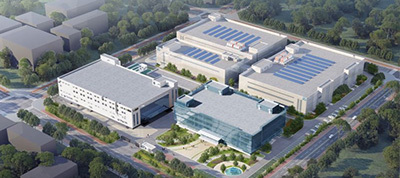 About UsBeijing Northland Biotechnology Co., Ltd. is an innovative biopharmaceutical company specializing in the research, development, production, and sales of gene therapy drugs, recombinant protein drugs, and ophthalmic drugs.
 -
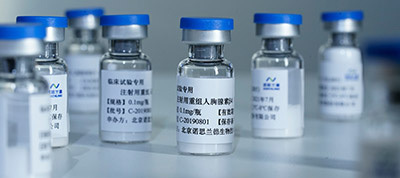 R&D and ProductsPrimarily dedicated to the research, development, and industrialization of novel bioengineered drugs in areas such as cardiovascular diseases, metabolic disorders, rare diseases, and ophthalmic diseases.
 -
 Investor RelationsGuided by the principle of “Creating Value, Serving Health,” the company is committed to becoming an innovative biopharmaceutical enterprise, contributing to the advancement of China’s pharmaceutical industry and the well-being of humanity.



Phase III result for Donaperminogene Seltoplasmid Ingection was unveiled at the 2025 MEC Conference, where experts jointly explored new strategies for CLI treatment.
From November 28 to 29, 2025, the 2025 Microcirculation Vascular Medicine (Chaoyang) Development Conference will be grandly held at the Beijing International Conference Center. As the year’s most significant academic event in the field of microcirculatory vascular medicine, the conference is jointly organized by the Chinese Microcirculation Association and the Beijing Health Promotion Association, and co-organized by the Specialist Committee for Peripheral Vascular Diseases of the Chinese Microcirculation Society and Beijing Chaoyang Hospital Affiliated to Capital Medical University. The conference has attracted top experts and scholars from various disciplines—including microcirculation research, vascular surgery, and cardiovascular medicine—both from China and abroad, who have gathered together to discuss the cutting-edge developments in this field.

Main Venue: Phase III Results of Donaperminogene Seltoplasmid Ingection Attract Attention
During the academic session at the main venue, Professor Ni Leng from Peking Union Medical College Hospital delivered a keynote speech titled “Gene Therapy Breakthroughs in Severe Lower Limb Ischemic Disease: Rebuilding Microcirculation—A New Therapy for Limb Salvage.” As one of the investigators in the Phase III clinical trial of Donaperminogene Seltoplasmid Ingection, he shared updates on the progress and key data from the Phase III clinical trial of Donaperminogene Seltoplasmid Ingection. In terms of effectiveness, The 180-day ulcer healing rate reached 43.5% (2.4 times that of the placebo group); the 180-day pain relief rate was 44.1% (2.5 times that of the placebo group); the 5-year limb-salvage survival rate was 67.1% (a 30% improvement over the placebo group); and the risk of amputation or death within 180 days was reduced by 87%. In terms of security, The incidence of adverse events was not significantly different from that in the placebo group, and long-term safety was good; a 9-year follow-up revealed no evidence of gene integration or an increased incidence of tumors. In terms of convenience, A regimen of three local muscle injections over four weeks can be administered in a standard treatment room, making it easy to implement and promote in clinical practice.
Donaperminogene Seltoplasmid Ingectioninjection delivers naked plasmid DNA via local intramuscular injection, which, after transfecting striated muscle cells, continuously secretes active HGF isoforms, specifically activating the HGF/C-MET signaling pathway. This promotes the formation of microcirculation, improves the microcirculatory environment, establishes collateral circulation, and restores blood supply to ischemic areas, thereby achieving therapeutic effects. The innovative mechanism and remarkable efficacy of this drug have drawn significant attention from the attending experts, enabling them to gain a deeper understanding of both the drug itself and its clinical applications in the treatment of CLI.

Sub-forum: Multidisciplinary Experts Discuss New Approaches to CLI Treatment
Meanwhile, the sub-forum on "Jointly Exploring New Strategies for CLI Gene Therapy," hosted by Beijing Northland Biotechnology Co., Ltd., concluded successfully. The forum was co-chaired by Professor Zheng Yuehong from Peking Union Medical College Hospital, who served as the conference chair, and Professor Zhang Wangde from Chaoyang Hospital in Beijing, who served as the executive chair. In their opening remarks, both chairs highly praised the innovative value of Donaperminogene Seltoplasmid Ingection and expressed their hope that it would be approved soon to benefit more patients. The sub-forum also invited seven renowned experts from fields including vascular surgery, clinical pharmacology, and integrated traditional Chinese and Western medicine—Professor Cui Shijun from Xuanwu Hospital of Capital Medical University, Professor Du Liping from Peking Union Medical College Hospital, Professor Song Shenghan from Chaoyang Hospital in Beijing, Professor Zhang Tong from Beijing Tsinghua Changgeng Hospital affiliated with Tsinghua University, Professor Zhao Hui from Luhe Hospital affiliated with Capital Medical University, Professor Wang Gang from Dongzhimen Hospital of Beijing University of Chinese Medicine, and Professor Hu Huisheng from the First Affiliated Hospital of Xi'an Jiaotong University. Experts from various fields brought multidimensional and in-depth professional perspectives to the meeting, offering valuable recommendations on the clinical application of Donaperminogene Seltoplasmid Ingection—from clinical diagnosis and treatment and pharmaceutical evaluation to multidisciplinary collaboration.

NORTHLAND Medical Manager Liu Yue and Senior Researcher Dr. Yang Ning systematically introduced the unique mechanism of action and clinical research data of Donaperminogene Seltoplasmid Ingection, and presented their preliminary ideas and plans for investigator-initiated studies to the attending experts. The experts also engaged in an in-depth discussion on the appropriate patient population, dosing regimens, and post-marketing research directions for Donaperminogene Seltoplasmid Ingection. The experts believed that Donaperminogene Seltoplasmid Ingection offers a new therapeutic option for CLI patients who currently lack effective surgical alternatives, providing protection for limbs and alleviating ulcer symptoms. They suggested that, given its mechanism of improving microcirculation and tissue perfusion, future research should explore its application in complex ischemic conditions such as diabetic foot and blue toe syndrome. Additionally, they recommended individualizing injection site selection based on the specific characteristics of vascular lesions and investigating precise delivery techniques such as ultrasound guidance. At the same time, the experts emphasized the importance of real-world safety monitoring, drug interaction studies, and standardization of operational procedures.

Building Consensus: Promoting Innovative Achievements to Benefit Patients
At the conclusion of the meeting, Professor Zheng Ruhong delivered a concluding speech and issued a call to action: We look forward to all parties continuing to focus on the field of CLI gene therapy, deepening collaboration around key areas such as the clinical application of innovative therapies and the optimization of diagnostic and treatment pathways. By pooling multidisciplinary expertise and establishing platforms for exchange, we can accelerate the translation of innovative medical advances into clinical practice, benefiting more patients.
The Phase III results of Donaperminogene Seltoplasmid Injection were unveiled at the 2025 MEC Conference, not only setting a clear direction for drug development and clinical application but also showcasing China's cutting-edge expertise in the interdisciplinary field of microcirculation medicine and gene therapy. As a company deeply committed to the gene therapy sector, NORTHLAND will continue to leverage technological innovation to address the clinical challenges of CLI and provide a “Chinese treatment solution” for the global field of gene therapy for lower-limb ischemic diseases.
Share to:


Friendly Links: Baidu | NORTHLAND
Contact Information
Address: Room A406, Zhongguancun Biomedical Park, No. 5 Kaituo Road, Shangdi, Haidian District, Beijing
Follow Us
Northland is an innovative biopharmaceutical company specializing in the R&D, manufacturing and sales of gene therapy drugs, recombinant protein drugs and ophthalmic medications.

Web site

NL-BIO
NL003
NL005